Thyroid Biopsy
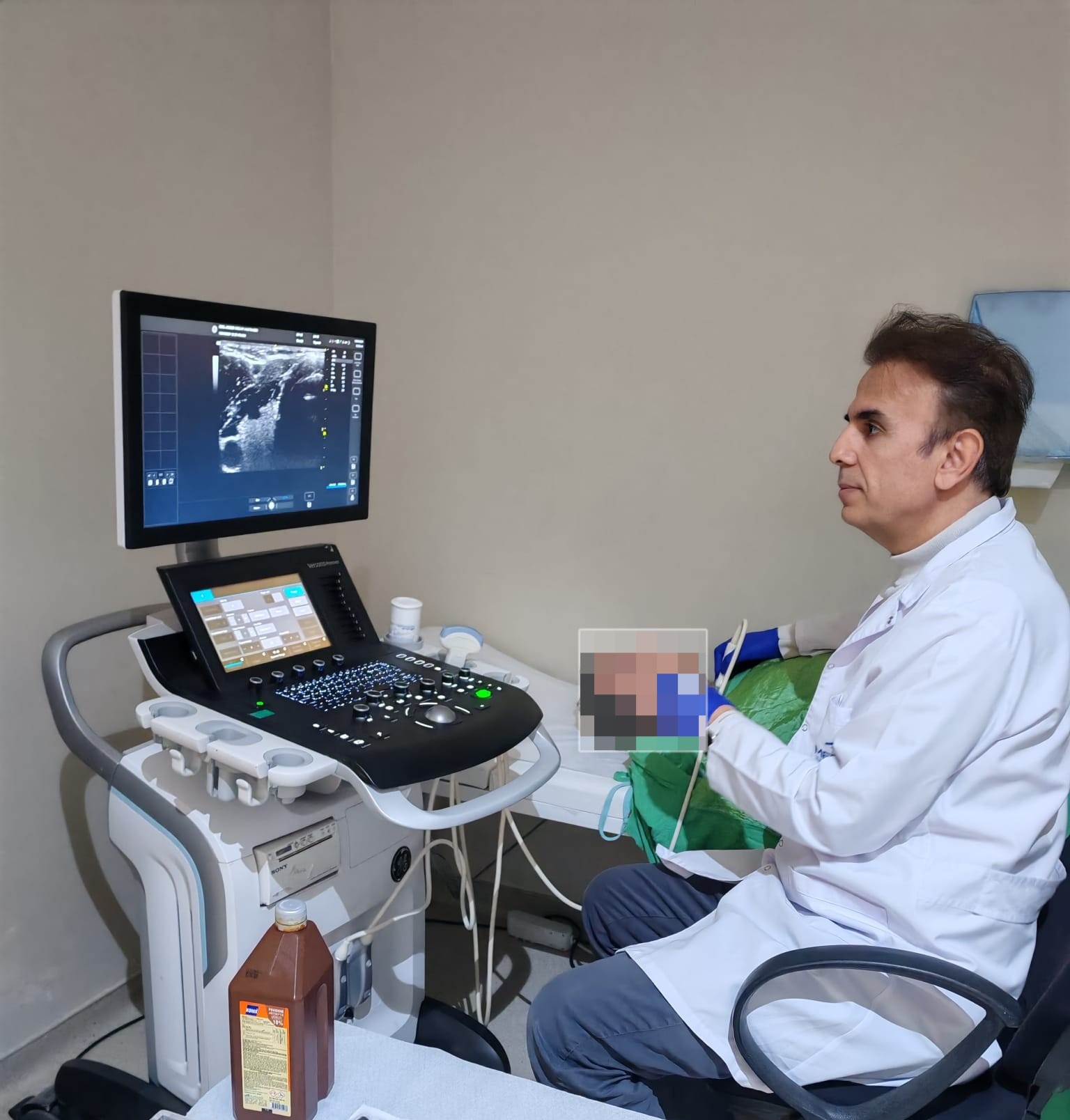
A safe, fast diagnostic method in which a cell sample is taken from a suspicious thyroid nodule with a very fine needle under ultrasound guidance.
What is thyroid fine-needle aspiration biopsy?
Thyroid fine-needle aspiration biopsy is the procedure of taking a cell sample with a very fine needle to determine whether suspicious nodules in the thyroid gland are benign or malignant. It is a safe and fast diagnostic method.
Why is thyroid fine-needle aspiration biopsy performed?
Thyroid fine-needle aspiration biopsy is performed, when a suspicious nodule is detected, to determine whether thyroid nodules are benign or malignant (cancer), to avoid unnecessary surgery and to make the correct treatment plan.
Which nodules need a biopsy?
A biopsy is recommended when a nodule suspicious for cancer is detected in the thyroid gland.
How is thyroid fine-needle aspiration biopsy performed?
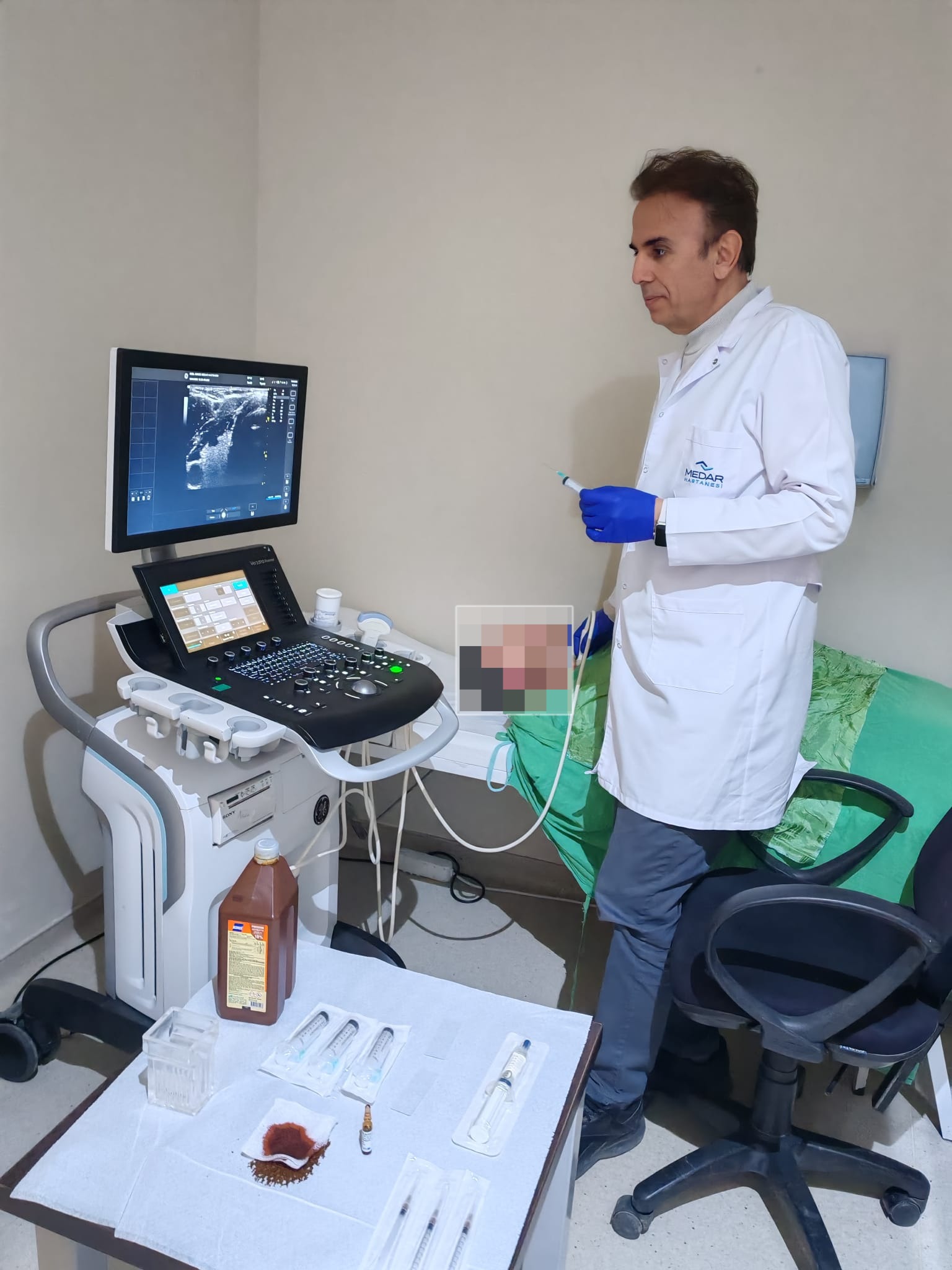
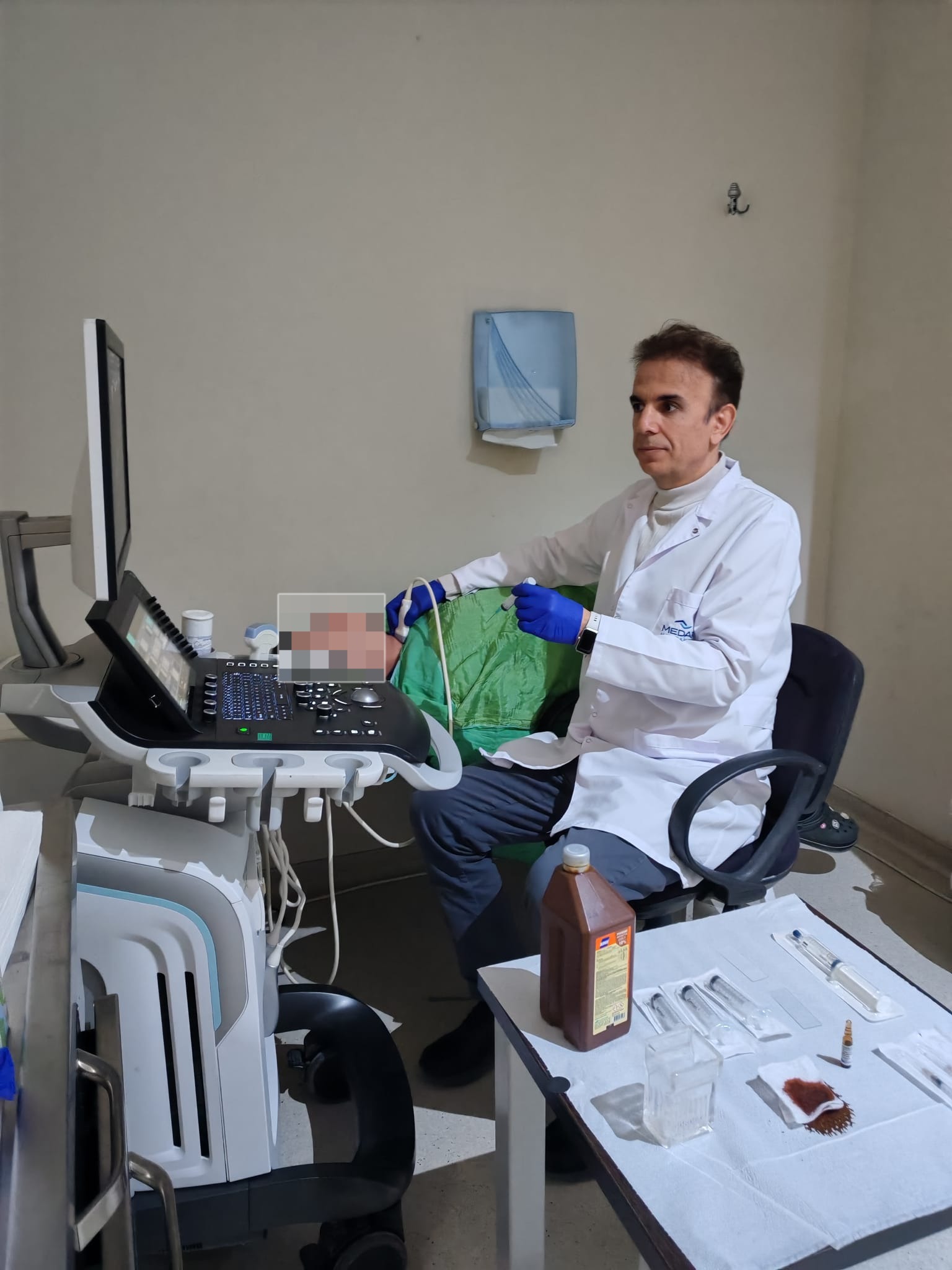
Before the procedure, the patient removes all jewelry and is prepared so that the neck area is exposed. They lie on their back on the couch and, similar to a thyroid ultrasound, the head is tilted slightly backwards. It is performed under ultrasound guidance and local anesthesia, by entering the nodule with a fine needle similar to the one used when drawing blood.
How long does thyroid fine-needle aspiration biopsy take?
The whole procedure, including preparation, usually takes 20 minutes.
Is the patient put to sleep during thyroid fine-needle aspiration biopsy?
Thyroid fine-needle aspiration biopsy is usually performed with local anesthesia, without putting the patient to sleep.
Is preparation required before thyroid fine-needle aspiration biopsy?
No preparation is required. Before the procedure, blood thinners may be temporarily stopped depending on the patient's condition, as they may increase the likelihood of bleeding during and after the procedure.
Is thyroid fine-needle aspiration biopsy a painful procedure?
During the procedure, before sampling begins, the area where the needle will enter is numbed with local anesthesia. Most patients feel mild pain.
Is there pain after thyroid fine-needle aspiration biopsy?
After thyroid fine-needle aspiration biopsy, some patients may feel mild pain, especially when swallowing. Some patients may also feel slight pressure or tingling at the procedure site. This is usually temporary, does not cause serious discomfort and resolves on its own within a few days.
Are there any undesirable situations after thyroid fine-needle aspiration biopsy?
Bleeding can sometimes occur in the area where the biopsy is performed. These bleedings are usually mild and at a level that can be controlled by applying pressure to that area without additional treatment.
Does thyroid fine-needle aspiration biopsy leave a scar?
Syringes similar to those used in blood drawing are used during thyroid fine-needle biopsy. Therefore, an almost imperceptibly small mark forms on the skin where the needle enters and exits. This mark usually becomes even less noticeable over time.
Does thyroid fine-needle aspiration biopsy cause a benign nodule to turn malignant or a malignant nodule to spread?
This procedure does not cause a benign nodule to turn malignant or a malignant nodule to spread.
What is done with the samples taken in thyroid fine-needle aspiration biopsy?
The samples obtained in thyroid fine-needle aspiration biopsy can be sprayed and spread onto a special glass called a slide, or washed in a special liquid. These glasses or the liquid are then sent to the pathology laboratory for evaluation.
In how many days do the pathology results of thyroid fine-needle aspiration biopsy come out?
The pathology result usually comes out within a few days.
How is a thyroid fine-needle aspiration biopsy reported in pathology; what do these mean?
A thyroid fine-needle aspiration biopsy is reported in six different ways. This is called the Bethesda classification. It is a standard 6-tier classification system used to report the results of fine-needle aspiration biopsies of thyroid nodules and to determine the cancer risk.
- Bethesda 1, non-diagnostic biopsy: This occurs in as few as 5–10% of cases in experienced hands. For a pathologist to say that a nodule is benign, a certain number of normal thyroid cells must be seen. In fluid-filled (cystic) nodules and in nodules that are highly vascular and bleed easily, the result may come back as insufficient even if the procedure is performed with the correct technique by an experienced person. In this case, the biopsy is repeated taking into account the features of the nodule.
- Bethesda 2, benign: The probability that a nodule reported as benign is malignant is less than 3%. Therefore, most nodules reported this way are followed up regularly. However, in nodules in the high-risk group according to ultrasound findings, a single benign biopsy result is not considered sufficient, and repeating the biopsy after a while is recommended.
- Bethesda 3, atypia of undetermined significance or follicular lesion of undetermined significance: In nodules in this category, some changes are observed in the cells; the probability of being malignant is less than 15–20%. If the repeat biopsy result is evaluated the same way, surgery or follow-up may be preferred according to the ultrasound features of the nodule.
- Bethesda 4, follicular neoplasm or suspicion of follicular neoplasm: This category includes follicular lesions that may be benign or malignant. The probability of the nodule being malignant is around 25–40%. To understand whether the nodule is benign or malignant, the entire nodule must be examined pathologically. Therefore, the general recommendation in this category is diagnostic surgery.
- Bethesda 5, suspicious for malignancy: In lesions in this category, a significant part of the cellular changes seen in cancerous nodules are observed but not all of them. The probability of these nodules being malignant is around 50–75%. As this is a high rate, surgery is usually recommended directly, without the need to repeat the biopsy.
- Bethesda 6, malignant: This category almost always (97–99%) indicates thyroid cancer. Surgery is recommended directly.